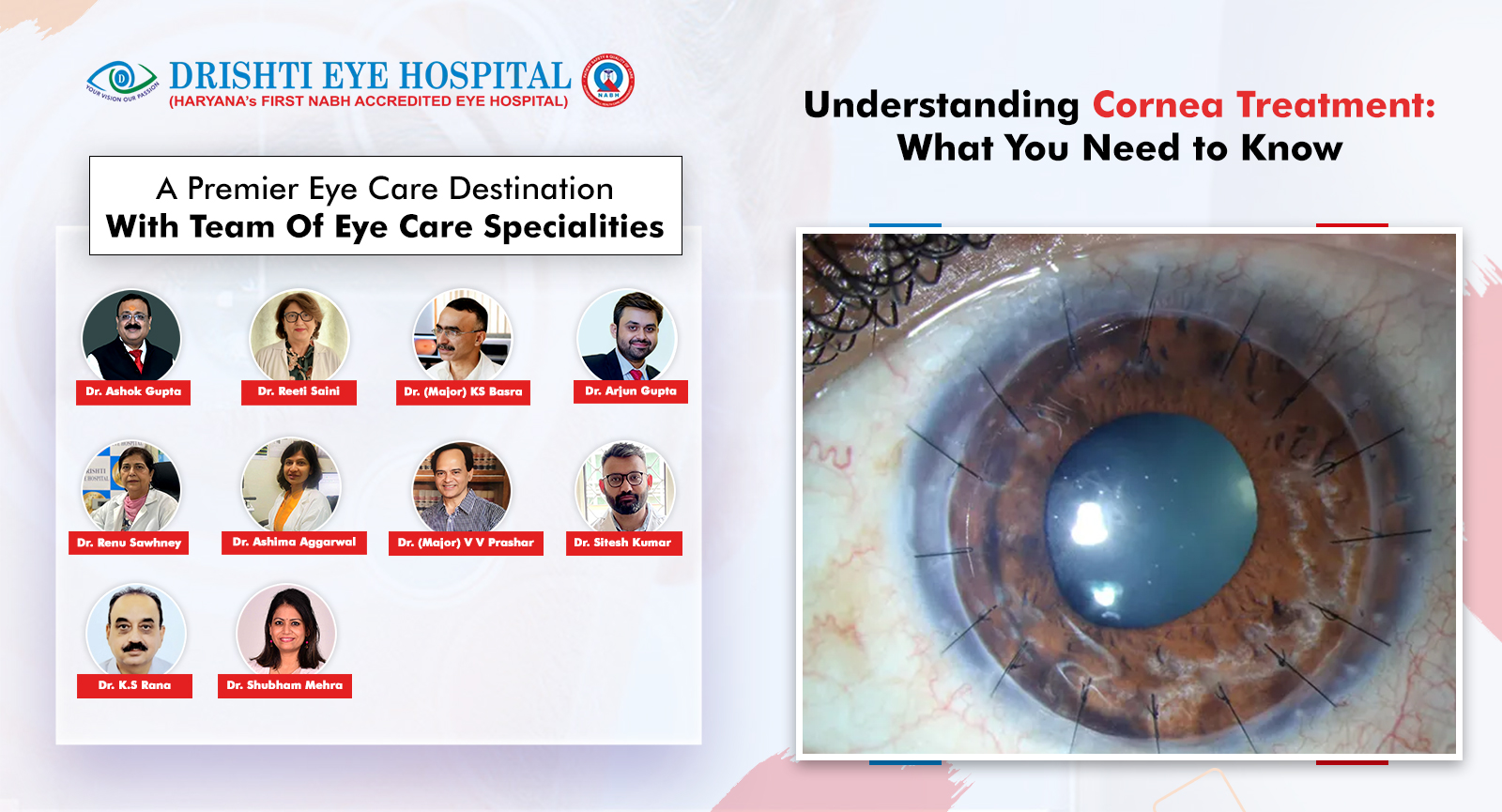
Your cornea is an important protective layer for your eye. It is part of the focusing process, which allows you to see properly and keeps unwanted objects out of your vision. It preserves the eye’s structures, adds to its refractive power, and directs light rays to the retina. However, because of its lack of blood flow, it is very vulnerable to infections, which can result in serious problems such as vision loss if not treated swiftly and appropriately. This is why identifying the symptoms and implementing effective cornea treatment is critical.
Cornea and Its Importance
Your cornea is the transparent, dome-shaped covering in front of each of your eyes. It acts as a protective windshield for your eyes. It keeps trash and bacteria out. Its unique form influences how your eyesight functions and filters certain ultraviolet (UV) radiation. Your corneas are located directly in front of your eye’s anterior (front) chamber, which is filled with fluid and contains the aqueous humor. Your iris and pupil are located behind the anterior chamber, and the lens follows. The sclera surrounds your cornea. They are also extremely sensitive, allowing you to respond intuitively and quickly to prevent additional damage to your eyes.
What are some common corneal disorders?
Your corneas are susceptible to injury, infection, and other disorders. Examples include:
Dry eye
The epithelium of your corneas requires tear fluid to function correctly. Tear fluid lubricates the eye surface and aids the epithelium in absorbing oxygen from the air. Dry eyes are uncomfortable and might impair your vision.
Infections
Damage to your cornea’s surface allows pathogens such as viruses, bacteria, fungus, and parasites to cause infections. One example is the parasite illness Acanthamoeba keratitis.
Corneal inflammation (keratitis)
This can be caused by a variety of ailments and difficulties, including infections, injuries, and diseases.
Injuries
Just like a car’s windshield, your cornea is susceptible to damage from external objects and events. This can result in scratches (abrasions), lacerations (rips), ulcers (sores), and erosions.
Environmental Damage
Your corneas are sensitive to severe temperatures. Common instances include corneal burns (caused by either heat or UV light). Your corneas are also susceptible to chemicals (whether in liquid or gas form).
Structural diseases (dystrophies)
Some diseases change the structure of your corneas, how they join and move together, or both. More than 20 disorders, including keratoconus and Fuchs’ dystrophy, are referred to as “corneal dystrophies.”
Here are Cornea Treatments you Should Know
Some of the most frequent therapies for corneal problems include:
Over-the-counter remedies
Simple corneal disorders, such as eye discomfort or dry eyes, may require easy remedies available at pharmacies or grocery stores.
Medications
Medications can treat a variety of corneal problems, including infections. Many of these drugs are in the form of ointments or eye drops that you apply directly to your eye, while others are pills that you take orally.
Coverings and wearable treatments
Wearing an eye patch, for example, can shield your eye and keep it closed while your cornea repairs. Scleral lenses, bandage contact lenses, and amniotic membrane grafts are among the most difficult therapies.
Laser surgery
These are vision correction operations that employ a laser to modify the curvature of your cornea, causing it to refract light differently. LASIK is one of the most frequent laser treatments.
Eye surgery
These operations can assist in a variety of ways, including mending damage and curing some corneal disorders.
Corneal transplant or artificial cornea installation
Over time, your corneas may grow hazy or cease refracting light properly. When these problems become serious, you may require surgery to replace your corneas.
Final Thoughts
Many factors impact the therapy options for corneal diseases. Possible factors include your individual condition(s), medical history, personal circumstances, and many more. Because so many factors might be involved, your eye care professional or healthcare provider is the best person to advise you on cornea treatment choices for your specific disease.
At Drishti Eye Hospital, we offer the best treatment for diverse corneal problems. Our professionals provide top-tier corneal treatments and ensure patients receive customized attention and achieve the best possible results. From treating abrasions and ulcers to performing complex procedures, we provide excellence in cornea care.