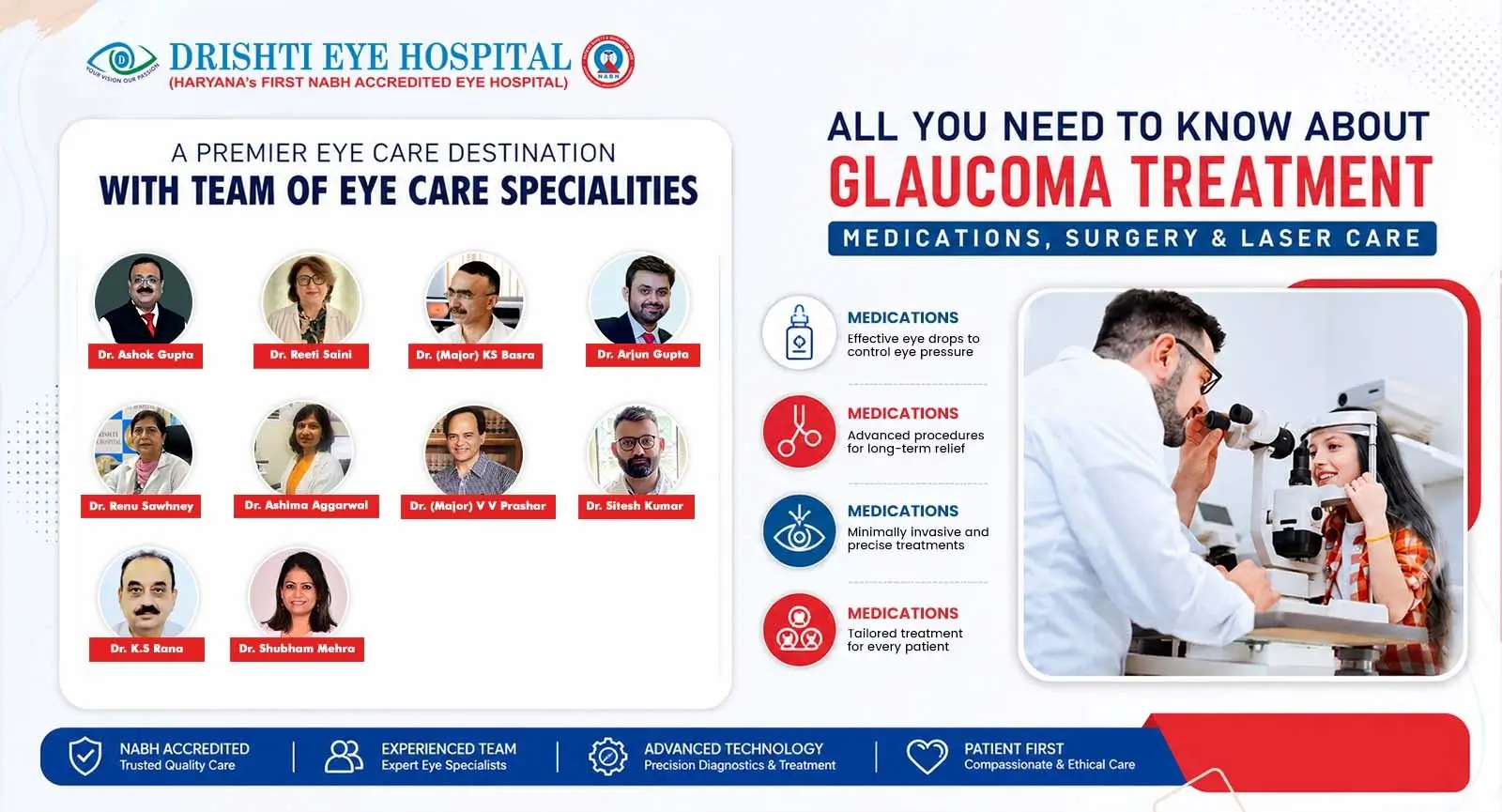
Here is something most people do not know about glaucoma — you can lose 40% of your vision and still not notice anything unusual. No pain. No blurry vision. Nothing that tells you something is wrong. By the time symptoms show up, the damage is already done. And that damage cannot be undone. This is exactly why glaucoma treatment matters so much. Not to fix what is lost, but to protect what is still there. If you have been diagnosed recently — or you are trying to understand what a family member is going through — this guide is for you.
What Is Glaucoma and Why Should You Treat It?
Glaucoma happens when pressure builds up inside your eye. This pressure hurts the optic nerve. Think of the optic nerve as a cable. It sends pictures from your eye to your brain. When this cable gets damaged, your brain does not get clear images anymore.
Once the optic nerve is damaged, you cannot fix it. Vision loss is permanent.
So what does glaucoma treatment do? It lowers the pressure inside your eye. It stops further damage. It saves the vision you still have. It cannot bring back vision you already lost, but it can stop you from losing more.
What Are Your Glaucoma Treatment Options?
When doctors say glaucoma treatment options, they mean three things:
- Eye drops or pills (medicines)
- Laser treatment
- Surgery
Most people start with eye drops. If that does not work well enough, they move to laser. If a laser is not enough, then surgery comes into picture.
Your doctor will decide based on:
- How bad your glaucoma is
- Your age and health
- How your eye responds to treatment
Glaucoma Medications: Eye Drops That Save Your Vision
Glaucoma medications are usually the first thing doctors prescribe. Most of the time, it is eye drops. Some people also take pills, but eye drops work better.
Eye drops work in two ways:
- They tell your eye to make less fluid
- They help your eye drain fluid better
- Less fluid or better drainage = lower pressure = less damage to your eye
Types of Eye Drops Doctors Prescribe
- Prostaglandin analogs – Used at night, help fluid go out
- Beta-blockers – Used during day, reduce fluid making
- Alpha agonists – Do both things at once
- Carbonic anhydrase inhibitors – Less common, reduce fluid
- Rho kinase inhibitors – New type, helps drainage
What You Must Remember About Eye Drops
- Put drops exactly as the doctor says. Not when you feel like it.
- Wash hands before putting drops in your eye
- If you use two different drops, wait 5 minutes between them
- Never give your drops to someone else
- If your eye burns too much or stays red, tell your doctor
Some people feel stinging when they put drops on them. This is normal for most drops. It goes away in a few seconds. If it stays longer, your doctor might change your drops.
Laser Treatment: Quick, Safe, Effective
If eye drops alone are not lowering pressure enough, your doctor might suggest a laser. Laser treatment is done in the clinic. You do not need to stay in the hospital. It takes 10-20 minutes.
Different Types of Laser for Glaucoma
SLT Laser (Selective Laser Trabeculoplasty):
- Works on the drain inside your eye
- Helps fluid flow out better
- No cutting, no pain
- Works for 2-5 years in most people
Laser Iridotomy:
- Used when your eye angle is narrow
- Doctor makes tiny hole in colored part of eye
- Helps fluid reach the drain
Laser Cyclodestruction:
- Used in severe cases
- Reduces how much fluid your eye makes
- Used when other treatments do not work
After the laser, some people can use fewer eye drops. Some can stop drops completely. But this depends on your condition. Your doctor will tell you.
Glaucoma Surgery: When Drops and Laser Are Not Enough
Glaucoma surgery is the last option. Doctors suggest it when drops and lasers do not control pressure. Surgery makes a new path for fluid to leave your eye.
Main Types of Surgery
Trabeculectomy:
- Most common surgery for glaucoma
- Doctor makes small flap in eye
- Fluid drains through this flap
- Done with local anesthesia (you are awake but eye is numb)
- Takes few weeks to recover
MIGS (Minimally Invasive Glaucoma Surgery):
- Newer type, smaller cuts
- Less risk, faster recovery
- Good for mild to moderate glaucoma
Drainage Devices:
- Small tube put in eye to drain fluid
- Used when trabeculectomy does not work
What Happens If You Do Not Treat Glaucoma?
This is serious. If you do not treat glaucoma, you will lose vision. Permanent.
It starts from the sides. You do not notice at first. Then it slowly moves to the center. One day you realise you cannot see things on the side. Then you cannot see straight ahead either. This is blindness.
Signs that treatment is not working:
- You keep losing side vision
- Dark patches in your sight
- You keep changing glasses but vision is not clear
- You cannot see well in dim light
This is why you must visit your eye doctor regularly. Even if you feel your eye is fine.
Simple Tips to Manage Glaucoma
- Go to all your eye check-ups. Do not skip.
- Put eye drops on time. Every single day.
- Tell your doctor all medicines you take
- Wear safety glasses when working or playing sports
- Exercise. But do not lift very heavy weights
- Eat green vegetables and colorful food
- Do not smoke
- Control your sugar and blood pressure
FAQs People Ask About Glaucoma Treatment
Q1. Can glaucoma be cured?
No. But it can be controlled very effectively. Most people with glaucoma who stick to their treatment keep most of their vision for life.
Q2. Which glaucoma treatment works best?
It depends on the type and stage. Mild cases usually respond well to drops. More advanced cases may need laser or surgery. Your doctor will guide you based on your specific situation.
Q3. Is glaucoma surgery safe?
Yes, generally. Like any surgery, there are risks involved — but for patients with progressive glaucoma, surgery is often the safest long-term choice.
Q4. How long does laser treatment last?
SLT typically lasts three to five years and can be repeated if needed.
Q5. Do I still need drops after glaucoma surgery?
Sometimes yes, sometimes no. Surgery often reduces or eliminates the need for drops, but your doctor will monitor your pressure and advise you accordingly.
Q6. What if glaucoma is left untreated?
Progressive, permanent vision loss — and eventually, blindness. There is no recovery from optic nerve damage, which is why catching and treating glaucoma early is so important.
Q7. When should I get tested?
If you are over 40, once every one to two years. Sooner if you have risk factors like diabetes, a family history of glaucoma, or past eye injuries.
Q8. When should I get tested?
Most types do not. Open-angle glaucoma is completely painless. Angle-closure glaucoma is different — it can cause sudden, intense eye pain and is a medical emergency.
Q9. Can glaucoma affect both eyes?
Yes. It often does. Even if only one eye is diagnosed, both should be monitored carefully.
Q10. Can lifestyle changes treat glaucoma on their own?
No. Healthy habits support your treatment — they do not replace it. Medications, lasers, or surgery are always needed to manage eye pressure.