Clear vision makes everyday life easier. From reading a book to driving a car, good eyesight plays a big role. Many people depend on glasses or contact lenses for years, but they often look for a long-term solution. This is where LASIK Surgery comes in.
If you’re tired of wearing glasses or contact lenses every day, you can always have refractive surgery and put your troubles behind. With refractive surgery, you may say goodbye to contact lenses and spectacles. Many surgical techniques are available, with LASIK being the most common. This blog covers everything you need to know about this procedure such as Lasik surgery types, benefits, and more.
What is LASIK surgery?
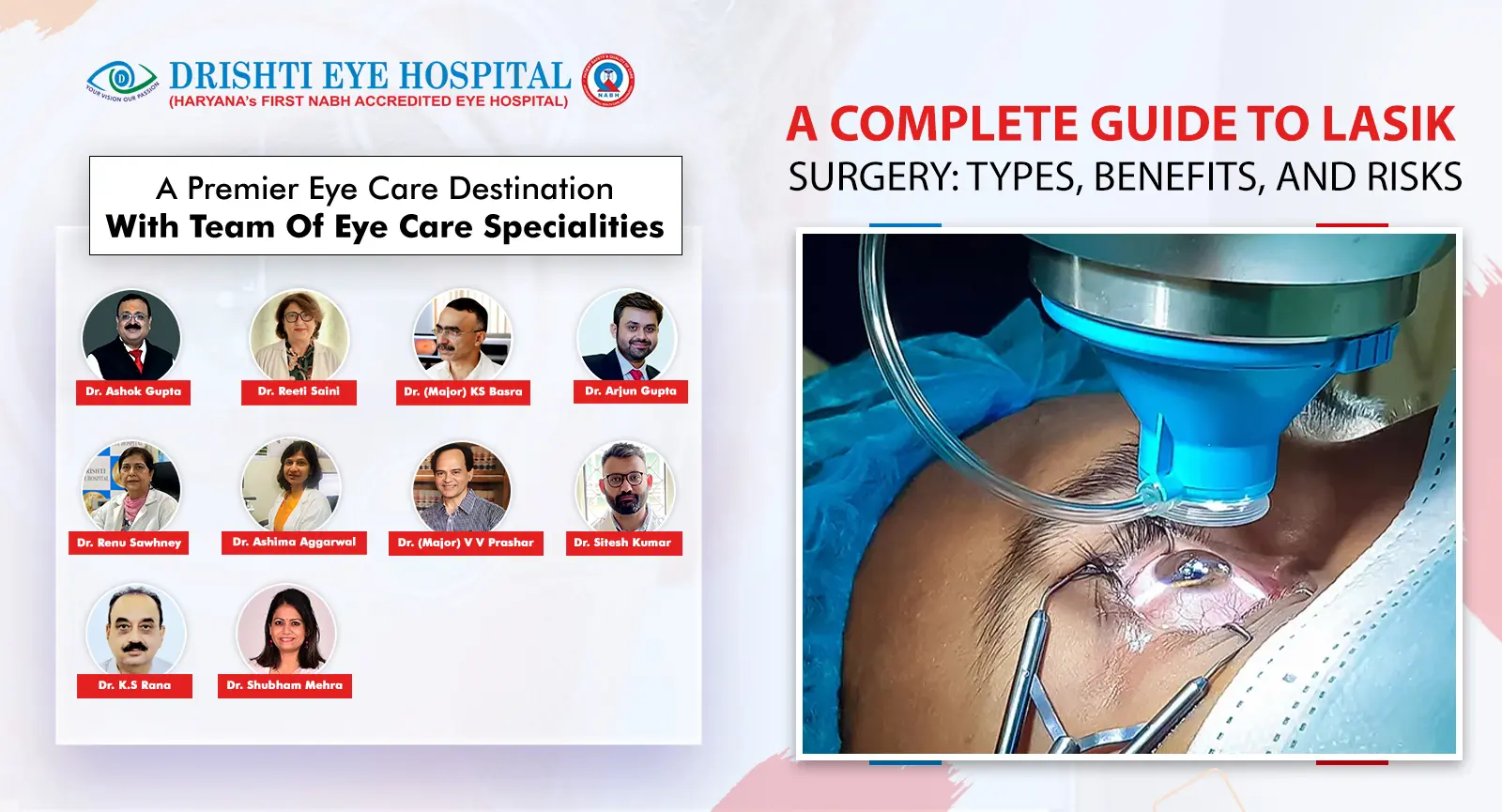
LASIK stands for laser in situ keratomileusis. It is an eye surgical procedure that uses lasers to correct common visual impairments caused by refractive defects. These mistakes arise when your eyes are unable to effectively catch light. Refractive errors can cause blurred vision, nearsightedness, farsightedness, and astigmatism.
During the LASIK procedure, a specific cutting laser is used to reshape the cornea, the transparent front section of your eyes, which results in permanent vision improvement.
Different Types of Lasik Surgery
Many people think LASIK is just one kind of treatment, but there are actually different types of LASIK surgery. The doctor decides which one is best after checking your eyes properly. Here are some popular laser eye surgeries:
Traditional LASIK
This is the most common option. A thin flap is created on the cornea using a small blade, and a laser reshapes the tissue underneath. The flap is then placed back in position.
Bladeless (All-Laser) LASIK:
In this method, a laser is used instead of a blade to create the flap. Many people prefer this because it feels more modern and safer.
Contoura Vision:
This is like Topography-Guided Lasik. It maps thousands of points on your eye to create a custom treatment. It’s often considered the gold standard for sharpness.
SMILE LASIK
This is a newer technique. There is no big flap here. A small piece of tissue is removed through a tiny opening. Healing can be faster for some people.
Benefits of LASIK Surgery
The biggest benefit is simple — freedom from glasses and contact lenses. Waking up and seeing clearly feels great for patients. Some of the benefits include;
Immediate Results:
Most people notice a massive difference within 24 hours.
No More Gear:
You save a fortune on expensive frames, lens solutions, and prescription sunglasses over the years.
Lifestyle Freedom:
You can swim, play sports, or just wake up and see the clock without fumbling around.
Quick Recovery:
Most patients are back to work and driving within a day or two.
Are There Any Risks in LASIK Surgery?
Like any surgery, it’s not 100% risk-free. Most side effects are temporary, but they should still be understood. Some people experience:
Dry Eyes:
For a few months after surgery, your eyes might feel gritty. However, eye drops usually fix this.
Glare and Halos:
You might see “rings” around lights at night for a while.
Under-correction:
Sometimes the laser doesn’t take off enough tissue, and you might still need a thin pair of glasses for night driving.
The good news? Serious complications are extremely rare, especially if you go to a reputable eye hospital.
Life after LASIK Surgery
Recovery is usually smooth. You may be asked to rest your eyes for a day or two. Rubbing the eyes, swimming, and heavy screen time should be avoided for some time. Following your eye doctor’s advice makes a big difference in results.
Is LASIK Right for You?
If you’re bored of using glasses or contacts, LASIK is an excellent option. Unfortunately, not everyone is able to have this surgery. Your ophthalmologist will need to decide whether you are a good candidate for it or not.
The ideal candidate for LASIK should:
- be at least 18 years old,
- not having an autoimmune illness that hinders healing,
- not being pregnant,
- have a current eye prescription that hasn’t changed in the past year,
- have healthy eyes, including a thick and scratch-free cornea.
Final thoughts
LASIK Surgery is not something you rush into. But for the right person, it can make daily life much easier. No more searching for glasses in the morning. No more lens troubles. If you are thinking about LASIK procedure, choosing the right hospital is just as important as the surgery itself. Drishti Eye Hospital offers advanced eye care, experienced doctors, and modern LASIK technology. Every patient goes through proper testing and consultation before any decision is made. Visit our hospital today for further discussion or consultation.